July 17, 2026
Teaching Jambu to Listen and Move
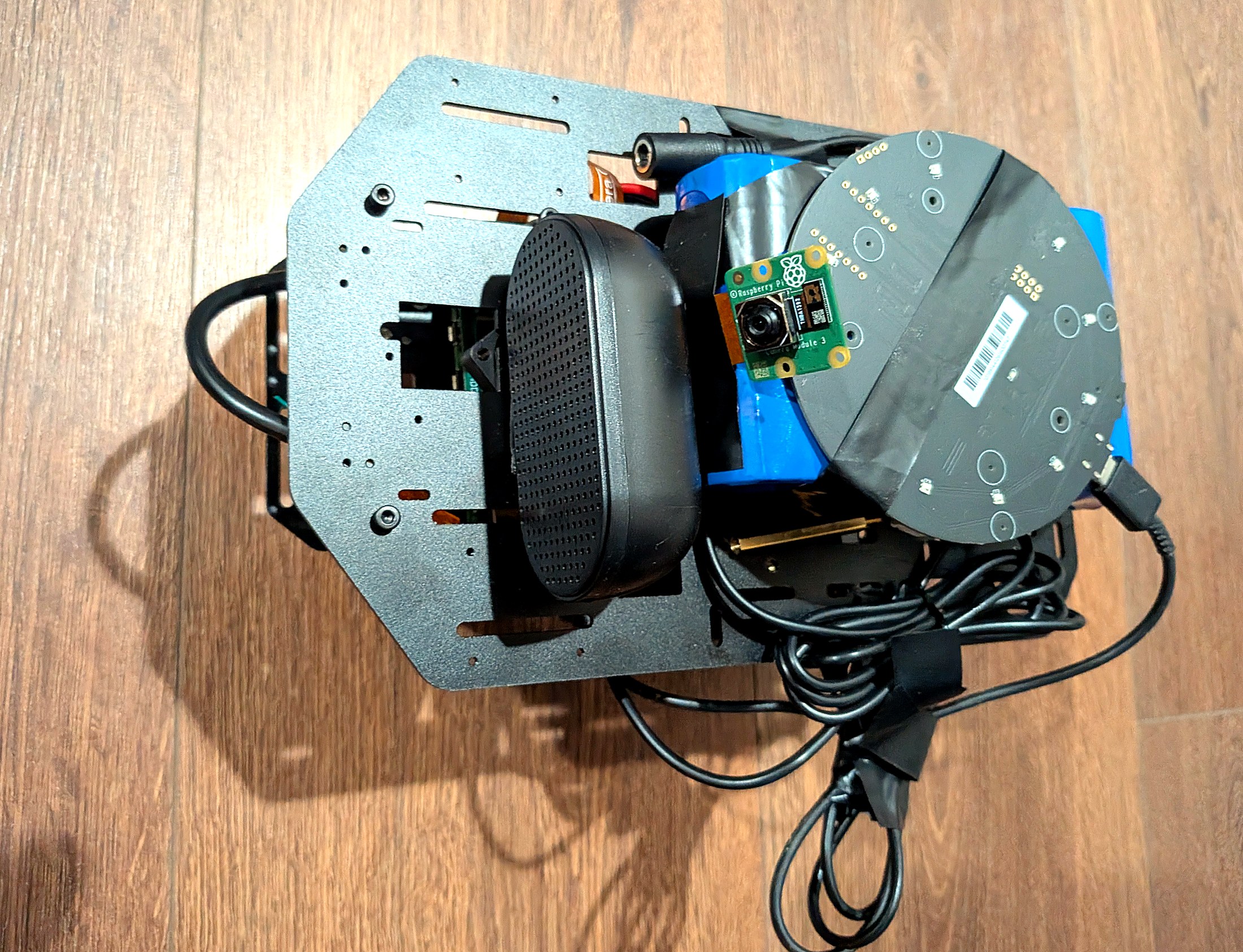
This is the moment the two halves of the project — the voice assistant brain and the newly-built body — actually met.
The full pipeline: a spoken command goes into the microphone, gets transcribed locally by an offline speech-recognition model (no cloud round-trip, no internet dependency), gets parsed into an intent (“move”, “forward”), gets handed to a motion planner that turns that intent into concrete timing and direction, and finally gets sent down to the motor driver to actually turn the wheels.
Getting from “wired correctly” to “reliably correct” took one genuinely tricky bug: wheels would occasionally spin the wrong direction, seemingly at random, despite the wiring and polarity both checking out. The onboard test buttons proving the hardware was fine — from the previous milestone — is exactly what pointed the investigation at software instead of wiring. The root cause turned out to be a timing issue: the driver chip needed a brief settle delay between setting a direction pin and ramping up motor speed, or it would occasionally catch a stale direction mid-transition. A tiny delay, entirely invisible in wiring diagrams, and the fix that made everything reliable.
Say “Jambu, move forward,” and it moves forward. Say “Jambu, turn left,” and it turns left. All of it running locally, with nothing leaving the device.