July 16, 2026
Building Jambu's Body
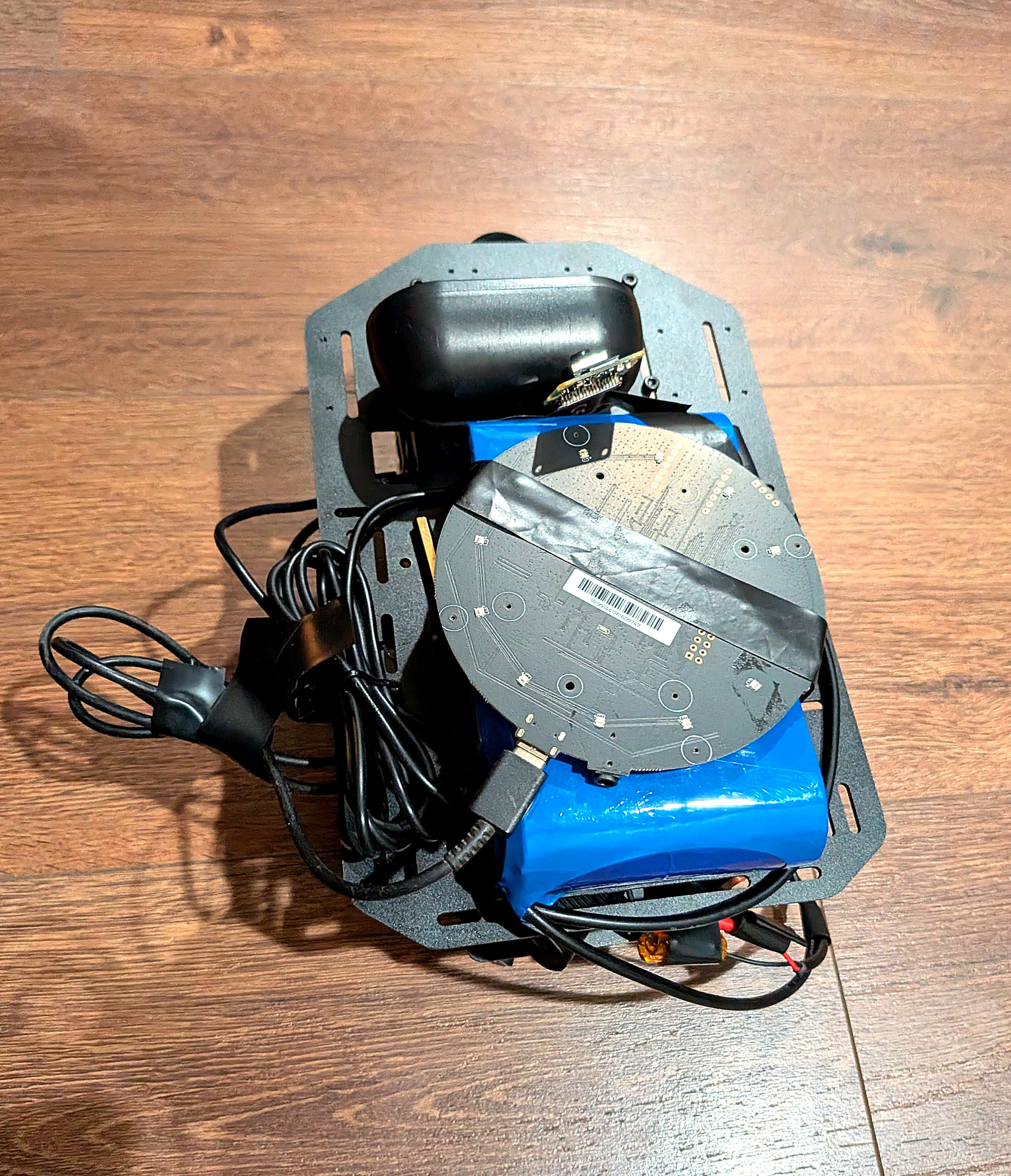
Jambu began life as a purely software project — an offline voice assistant that lived on a Raspberry Pi and could listen, think, and talk back, but couldn’t go anywhere. The next chapter was about giving it a body.
The base is a simple 2WD chassis: two drive wheels on encoder-equipped gear motors, plus a couple of casters for balance. Nothing exotic — the kind of kit a lot of hobby robots start from.
The more interesting part was power and control. Motors need more current than a Raspberry Pi’s GPIO pins can safely provide, so Jambu got a dedicated motor driver HAT sitting on top of the Pi. Getting it mounted took some creative spacing — the Pi’s case has taller components than a standard HAT clearance allows for, so it ended up riding on an extension header instead of sitting flush.
One small but important discovery: the driver board has real screw terminals along one edge, not just a pin header. Bare wire clamped into a screw terminal doesn’t work itself loose the way a jumper wire does — worth knowing before wiring anything that’s going to actually drive around a room.
Body: assembled. Next problem: figuring out which of the six wires coming out of each motor actually deliver power.